Understanding insulation is a crucial step for any homeowner looking to improve energy efficiency and comfort. At the core of this topic is a simple but vital concept: what is an R-value of insulation? In this article, we’ll break down what an R-value is, provide a comprehensive chart, and answer common questions to help you make informed decisions about your home’s insulation.
Defining R-value: So, What is an R-value of Insulation?
When you’re looking at insulation, whether for an attic, a wall, or a crawl space, you’ll constantly see the term “R-value.” So, what is an R-value of insulation? Simply put, it’s a measure of the insulation’s ability to resist heat flow. The “R” stands for thermal resistance.
Think of it like this: heat naturally moves from a warmer area to a colder one. In the winter, heat from your home tries to escape through your roof, walls, and floors to the colder outside. In the summer, the opposite happens—the sun’s heat tries to get into your cool, air-conditioned home. Insulation’s job is to slow this process down. A higher R-value means the material has a greater thermal resistance, making it more effective at preventing heat transfer.
For homeowners, this translates directly to comfort and energy savings. Proper insulation with an appropriate R-value keeps your home warmer in the winter and cooler in the summer, reducing the strain on your HVAC system and lowering your energy bills.
Our Complete Insulation R-value Chart
To help you understand the options, here is a general chart outlining the typical R-value per inch for common insulation types.

What R-Value Do You Need in Denver, Colorado?
The ideal R-value for your home depends heavily on your climate zone and where the insulation is being installed. Denver is located in Climate Zone 5, which experiences a wide range of temperatures. According to both the U.S. Department of Energy and local energy codes, the recommended R-values for homes in our area are:
- Attics: For uninsulated attics, it’s recommended to add R-49 to R-60.
- Exterior Walls: Recommended R-values typically fall between R-13 and R-21.
- Floors: For floors over unconditioned spaces, such as crawl spaces or garages, an R-value of R-25 to R-30 is recommended.
These are general guidelines. The best R-value for your specific home will depend on its unique construction, existing insulation levels, and other factors.
Other Factors That Affect Insulation Performance
While the R-value of insulation is the primary measure of its effectiveness, it’s not the only thing that matters. A high R-value won’t perform as intended if other issues are present. Here are some key factors that can affect your insulation’s performance:
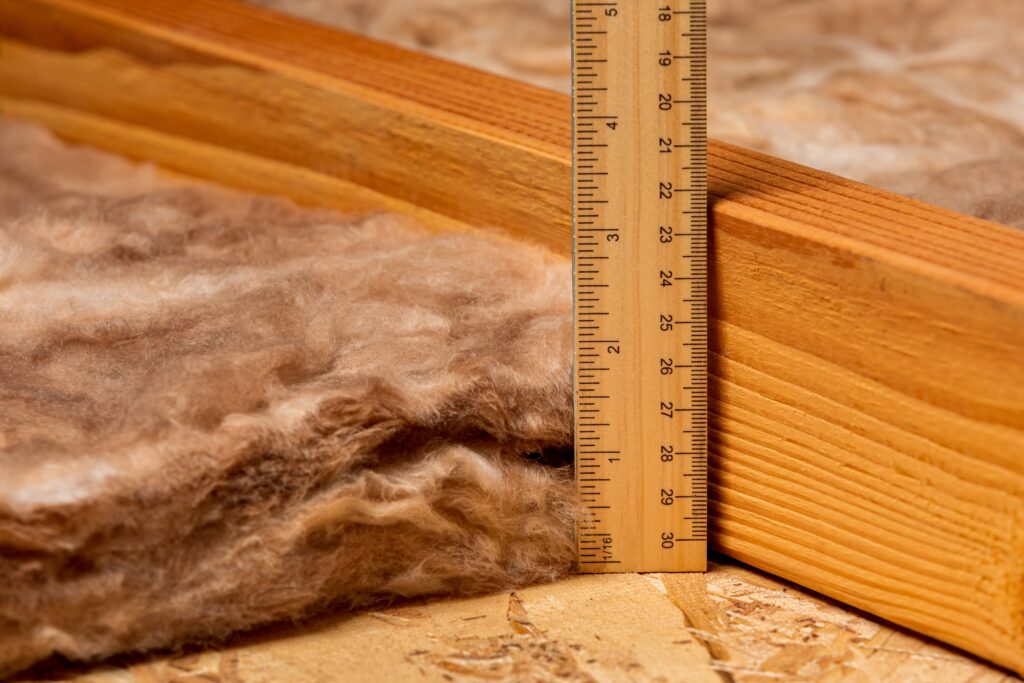
- Proper Installation: Poorly installed insulation, such as batts with gaps or compressed material, will significantly reduce its effective R-value.
- Air Sealing: Insulation slows heat transfer, but it doesn’t stop airflow. Air leaks through gaps and cracks can bring in moisture and let heat escape, undermining your insulation’s performance. Proper air sealing when usings batt insulation or installing blown in insulation is a crucial.
- Moisture: Wet insulation loses much of its effectiveness. Moisture can come from roof leaks, condensation, or high humidity, and it can ruin your insulation and lead to mold or rot.
- Material Degradation: Over time, some insulation materials can settle, sag, or break down, which can decrease their R-value.
Quick Q&A on R-value & Insulation
To better understand what an R-value of insulation is, check out these Q&As below.
Q: Is a higher R-value always better?
A: Generally, yes, a higher R-value is better because it provides greater resistance to heat flow. However, there’s a point of diminishing returns. The goal is to choose an R-value that is cost-effective and appropriate for your home’s climate and specific application. It’s a balance between initial cost, potential energy savings, and available space.
Q: Does R-value change over time?
A: The R-value of most insulation materials is designed to last the lifetime of the home. However, it can decrease if the insulation is damaged or improperly installed. For homeowners considering blown-in vs batts insulation, it’s helpful to know that while batts can lose their insulating power if compressed or wet, blown-in insulation can settle over many years, which might slightly decrease its effective R-value. Ultimately, proper installation and maintenance are key to preserving performance.
Q: Can you have too much insulation?
A: While it’s rare to have “too much” insulation from a performance standpoint, over-insulating without proper ventilation can cause problems. If you completely seal off your attic or other spaces without allowing for adequate airflow, you can trap moisture, leading to condensation, mold, and rot. It’s essential to balance a high R-value with a well-ventilated space.
Let the Mile Hi Roofing Experts Help You Determine Your Ideal R-Value
There are many factors to consider when choosing the right insulation, including the climate, building codes, and the specific needs of your home. Now that you know what an R-value of insulation is, it’s time to let the experts at Mile Hi Roofing provide you with a professional assessment to help you find the perfect solution.
We understand Denver’s unique climate and can recommend the right R-value and insulation type for your project. Don’t let your energy dollars go out the roof—let us help you improve your home’s energy efficiency and comfort. Contact us today.